
-
Q1: Insecurity, Sit-at-home, Petrol Scarcity Caused Food Price Hike

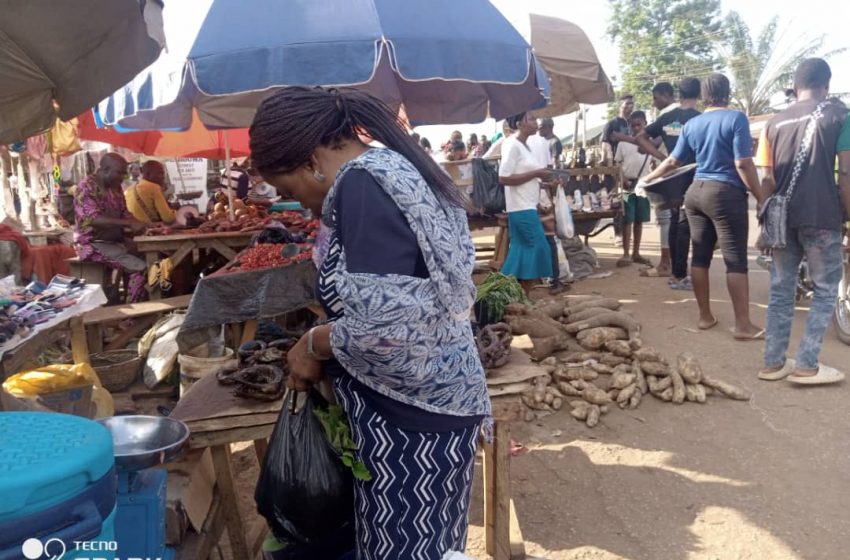
According to a latest report by SBM Intelligence, continuous insecurity challenges, sit-at-home order and recent hike in fuel are major indicators that increased the prices of foodstuffs in the first quarter of 2022. The report, titled ”Jollof Index Q4 2021 & Q1 2022: Geopolitics Comes for Dinner”, showed an explanation of food inflation in Nigeria…
-
Mobile Transactions Hit N8.07tn In Five Years
According to the Nigeria Interbank Settlement System and Nigerian Communications Commission, mobile transactions in Nigeria have jumped by 4,009.58 percent to hit N8.07tn within a five-year period as the number of telecommunication subscribers rises by 34.91 per cent to 195,128,265. Reports on the mobile inter-scheme transaction data tracked on the NIBBS portal revealed that mobile…
-
Trading In Fixed Income, Currency Markets Drop By 31.2%
A January 2022 report released by the FMDQ Exchange has revealed that trading in the fixed income and currency (FIC) market has slumped back to 31.21 percent after the December 2021 uptick. The report said that Nigeria’s financial markets trading platform has put transaction volume at N14.13 trillion, down from N20.54 trillion recorded in December,…
-
Nigerians Drop 24.38 Million GSM Lines In Two Years

An analysis of industry statistics from the Nigerian Communications Commission has revealed that the number of GSM lines abandoned by Nigerians has grown by 24.38 million in two years. According to the report, in January 2020, there were 83.81 million unused lines in the nation. By January 2022, the number had grown to 108.47 million. …
-
Nigeria’s Economy To Grow By 3.4% In 2022
The IMF revealed a 3.1 percent growth projection for the nation in 2023, down from 3.4 percent in 2022 and 3.6 percent in 2021. Nigeria’s economic projection is lower than that of the Sub-Saharan African region, which is expected to grow by 4.5 per cent in 2021, 3.8 per cent in 2021, and 4.0 per…
-
Net Foreign Exchange Inflow Falls 27%
Analysis of the fourth quarter 2021 statistical bulletin of the Central Bank of Nigeria has shown that the net foreign exchange (forex) inflow into the economy fell by 27 percent, Year-onYear. This is a drop to $52.46 billion in 2021 from $70.66 billion in 2020. The CBN data showed that forex inflow into the economy…
-
Domestic, Int’l Passengers Rise By 44%, hit 15.23million

Nigerian Airports witnessed increased patronage between January and December 2021, as the number of air travelers rose to 15.23 million from 10.55 m recorded in 2020. According to the latest Air Transport Report released by the National Bureau of Statistics, the figure includes domestic and international passengers. This means that air travellers across Nigerian airports…
-
Power Generation Drops By 19%

Nigeria power generation has dropped by 19.23 percent to 3,089.30 Megawatts during the Easter festivities. This development left most parts of the country without electricity supply for the festive season. According to data from the Independent System Operator (ISO) portal, a semi-autonomous unit at the Transmission Company of Nigeria (TCN), the drop is against the…
-
Comparing Q1 Inflation Rate Across Five Years
According to the latest figures from the National Bureau of Statistics, Nigeria’s Consumer Price Index rose to 15.92 percent in March 2022. This new figure was the highest the country has recorded since November 2021. In the first quarter of the year, Nigeria’s inflation rate grew from 15.60 percent in January to 15.92 recorded in…
-
Nigeria’s Economic Growth Slowed In February

According to the Central Bank of Nigeria’s report, the economy recorded slow growth in February. The CBN’s Monetary Policy Committee report showed that in February, the Manufacturing Purchasing Managers’ Index recorded slow growth, with the Non-Manufacturing PMI also contracting. It stated that, “The Committee, however, noted that although the Manufacturing Purchasing Managers’ Index, remained above…